Kinect Build Industries
The Tandon Launchpad
"Kinect the Community to the Campus"
Project Manager | BIM Specialist
EG-1004: Introduction to Engineering Design Capstone Project
September 2024 - December 2024
Project Overview
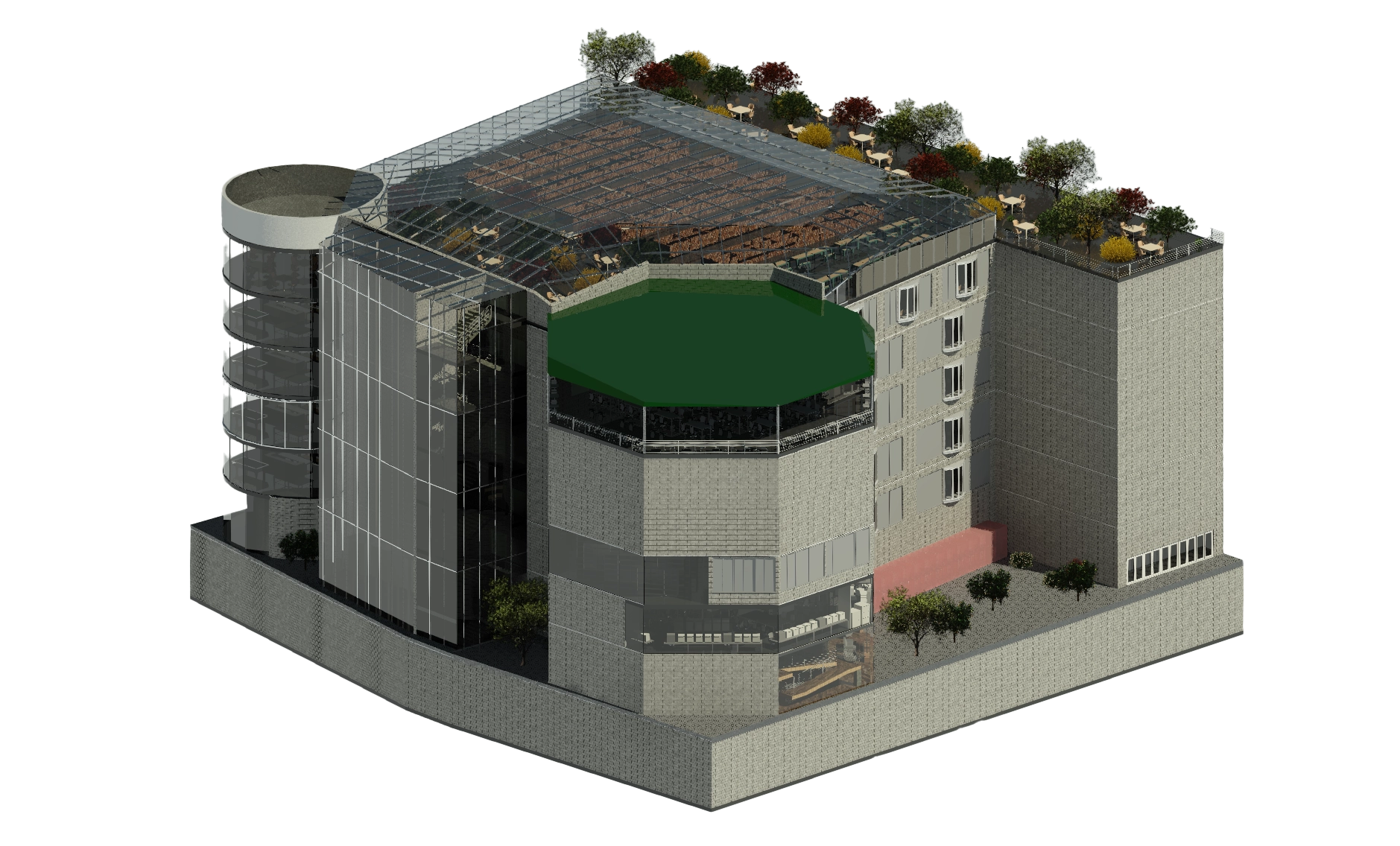
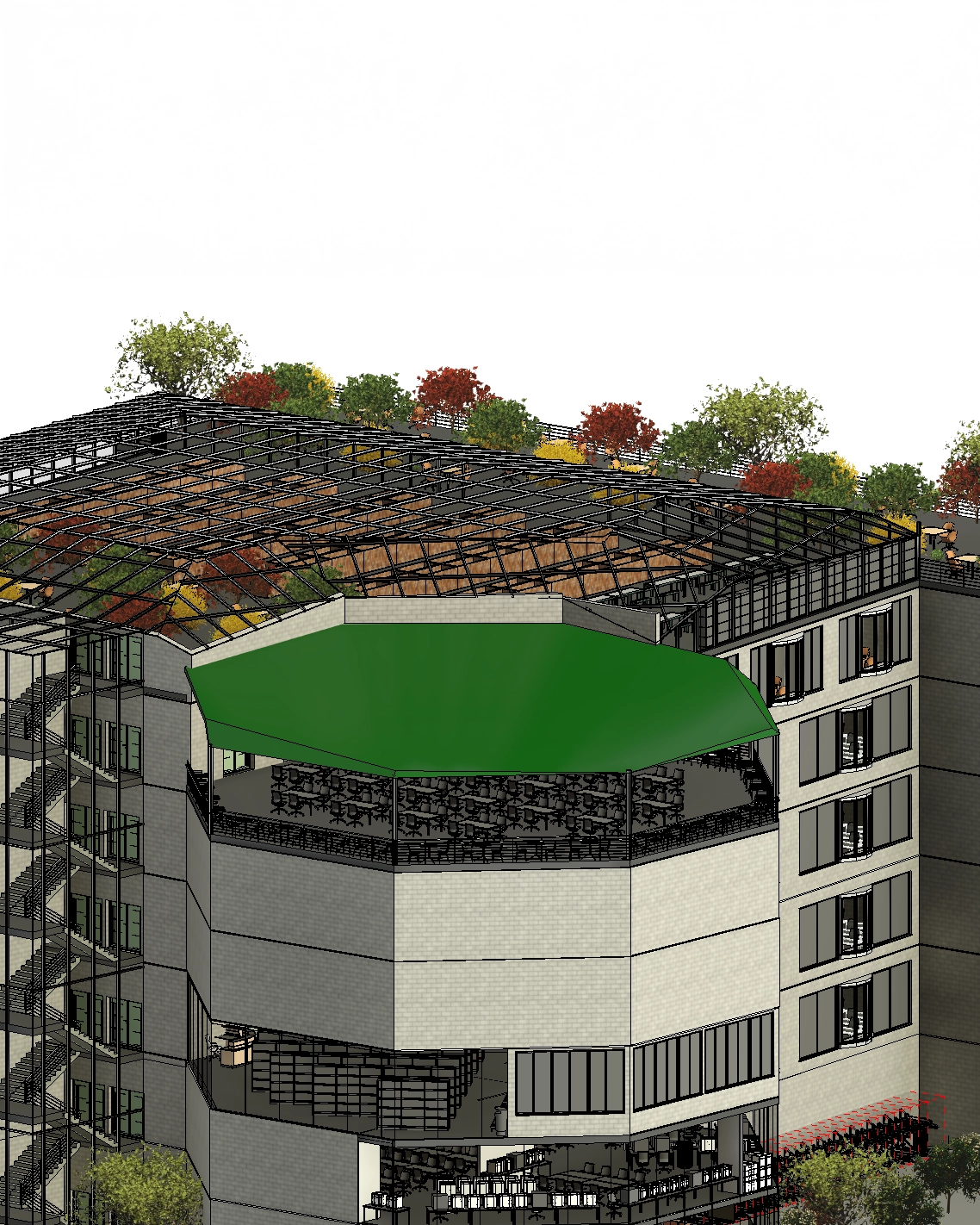
The Tandon Launchpad represents a paradigm shift in student facility design—an 8-story, LEED Platinum-certified student hub that transcends the traditional "box" architecture through innovative geometric integration. Spanning 200 ft × 200 ft, this comprehensive facility houses lecture halls, classrooms, dorms for 100+ students, a two-floor library, makerspace, state-of-the-art gym, rock climbing wall, greenhouse, and diverse communal spaces.
As Project Manager for Kinect Build Industries, I orchestrated the complete development lifecycle from initial concept through final submission, coordinating a 4-member interdisciplinary team through Professor Ray Li's capstone course. The project integrates 5+ advanced energy systems—including solar panels, rainwater harvesting, greywater recycling, and intelligent HVAC—achieving exceptional sustainability while creating the ultimate student-centric environment.
Leveraging Autodesk Revit for comprehensive BIM modeling and Fusion 360 for physical model preparation, the design breaks conventional constraints through strategic use of octagons (large spaces like lecture halls), circles (entrances and lounges), and rectangles (dormitories)—each shape purposefully selected to optimize function, flow, and aesthetic impact.
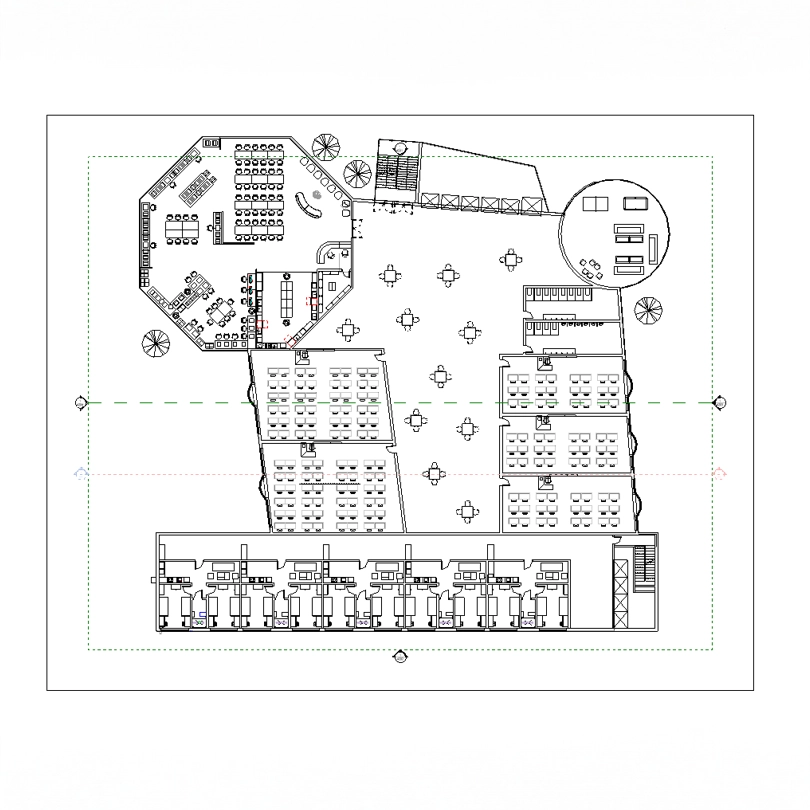
Comprehensive floor plans showcasing diverse geometric integration
Project Team
Brian Umana
Project Manager
- Project scheduling & timeline management
- Complete Revit building model
- Logo design & competition submissions
- Cross-functional coordination
- Promotional video production
Hussain Noor
Head of Construction
- Floor plan sketches & iterations
- Lecture hall & lounge modeling
- Makerspace, library, 6th floor designs
- LEED Accreditation Report
- Gym & greenhouse completion
Lakshya Jain
Head of Design
- Microsoft Project scheduling
- 20-person classroom modeling
- Electrical & plumbing systems
- Fusion 360 physical model plans
- Physical model construction
Shaurya Singh
Head of Finances
- Cost estimate development
- 40-person classroom modeling
- Budget tracking & allocation
- LEED feature research
My Role: Project Management & Technical Leadership
As Project Manager, I served as the central coordinator ensuring seamless integration across design, construction, finance, and technical domains. Beyond traditional project management, I took ownership of the complete Revit building model, logo design, and promotional content while maintaining rigorous schedule tracking, deliverable management, and cross-team communication throughout the 3-month development cycle.
Schedule & Deliverable Management
Orchestrated comprehensive project timeline tracking using Gantt charts and milestone-based planning, coordinating weekly Tuesday meetings following exam hours. Managed deliverables across three major milestones and two benchmark submissions, ensuring on-time completion despite compressed timelines and unexpected challenges including cancelled lab sessions.
Maintained active risk management, tracking dependencies between team members' work streams. When challenges arose (logo rejections, team member absences), rapidly reallocated tasks and adjusted timelines to maintain forward momentum toward the December 4th final submission deadline.
Complete Revit BIM Modeling
Architected the entire 8-story building model in Autodesk Revit, integrating floor plans from initial sketches into a comprehensive digital twin. Modeled all structural elements, elevators, stairs, bathrooms, and common spaces while incorporating team members' specialized room models (classrooms, lecture halls, dorms, library, makerspace, gym, greenhouse).
Ensured model consistency, proper scaling within the 200 ft × 200 ft footprint, and seamless interface between diverse geometric shapes. Added LEED-compliant features including glass walls, solar panel placements, and sustainable system integrations directly into the BIM environment.
Cross-Functional Coordination
Facilitated collaboration across design, construction, and finance teams, establishing clear communication protocols via weekly in-person meetings and Instagram-based updates. Coordinated dependencies between Revit modeling, floor plan iterations, cost estimates, and scheduling to ensure cohesive project progression.
Successfully navigated team dynamics including adapting to reduced contributions from one team member by redistributing workload and maintaining team morale. Mentored team members on Revit workflows, model organization, and benchmark requirements ensuring everyone contributed effectively to shared goals.
Creative Content & Presentations
Designed the Kinect Build Industries logo through 8+ iterations, refining CAD modeling, weight optimization, and aesthetic appeal until final approval. Created comprehensive promotional video showcasing building features, sustainability innovations, and design philosophy for competition submission.
Led development of presentation materials for three milestone reviews, covering background information, project objectives, cost estimates, and conclusions. Created separate Excel tracking sheets for costs and heat/power analysis, ensuring thorough documentation of all project aspects.
Design Evolution: From Concept to Completion
🎯 Initial Brainstorm & Concept
Following rejection from RAD project, team pivoted to HIR project with bold vision: reject traditional "box" architecture. Established core design philosophy incorporating octagons, circles, and rectangles—each shape serving distinct purposes. Octagons for major spaces (lecture halls, library), circles for entrances and lounges, rectangles for dormitories.
Defined comprehensive facility requirements including makerspace, two-floor library, gym with rock climbing wall, kitchens in dorms, and abundant communal spaces to create the ultimate student environment. Committed to pursuing LEED Platinum certification and incorporating electrical circuits for automatic doors, lighting, and elevators.
📐 Floor Plan Development
Established weekly Tuesday meetings post-exam hour. Refined floor plans dedicating entire basement floor, top floor as greenhouse, and floor below as comprehensive lounge space with game tables, outdoor lounge, and board game areas. Distributed initial tasks: Lakshya handling scheduling, Hussain drafting floor plans, Shaurya on technical specs and cost estimates, Brian on Revit modeling.
Milestone 1 materials completed: Microsoft Project schedule, construction timeline, cost estimates, and initial Revit model. Faced challenge when second draft floor plans proposed separating dorms from main building—rejected due to 200 ft × 200 ft constraint and desire to maintain integrated design.
🏗️ Benchmark A Success
Floor plans finalized and distributed to Brian for Revit modeling. Strategic decision: Reduced floors from 10 to 8 to meet 1-foot height cap for physical model while maintaining all essential facilities. Logo first draft completed. All specialized room models finished: lecture hall, 20-person classroom, 40-person classroom, mini lounge.
Successfully benchmarked Benchmark A despite last-minute challenges including one team member's non-contribution requiring rapid task redistribution. Completed Preliminary Design Investigation. Logo initially denied—began iterative refinement process.
🎨 Milestone 2 & Refinement
Virtual meeting via Instagram coordinating next phase: Hussain remodeling lecture hall and commuter's lounge, Lakshya modeling dorms and drafting LEED features, Shaurya modeling gym and greenhouse, Brian refining existing model and integrating all components. Milestone 2 Presentation delivered successfully with updated technical design descriptions, LEED information, and cost estimates.
All specialized models completed and integrated into master building model. Logo denied second time for being overweight—redesigned and resubmitted. Team coordination strengthened despite continued challenges with one member's participation.
✅ Benchmark B Achievement
Hussain completed makerspace, library, and sixth-floor lounge models. Lakshya finished electrical and plumbing for representative spaces (classroom, mini-lounge, dorm). Logo finally approved after 8 iterations! Lab cancellation provided extended benchmarking window—team capitalized on extra time to ensure quality.
Successfully benchmarked Benchmark B with comprehensive deliverables: additional facilities modeled, dorm rooms for 100+ students, complete floor plans, plumbing and electrical systems, entire building model with LEED features integrated. Milestone 3 Presentation completed November 7th.
🏁 Final Sprint
Makerspace meeting determined physical model cross-section placement and scale. Lakshya converting wall/floor plans to Fusion 360 for laser-cutting physical model components. Brian building electronics for physical model features. Hussain finalizing Revit model, completing gym and greenhouse (covering for absent team member), adding bathroom doors and dorm elevators/stairs.
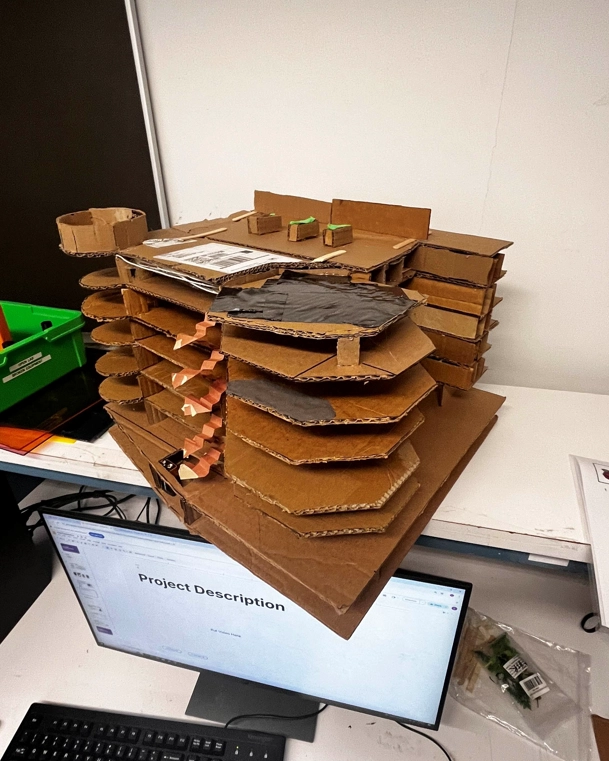
Competition form submitted November 17th. Parallel tracks: Lakshya constructing physical model, Brian producing promotional video, Hussain completing LEED Accreditation Report and formalizing Engineering Notebook. Physical model and video completed November 20th.
🎯 Final Deliverables
Final presentation development sprint: Lakshya covering market analysis and problem statement, Brian handling conclusion and project objectives plus creating separate Excel sheets for costs and heat/power calculations, Hussain completing technical specifications. All materials finalized and submitted December 4th during Modelshop—project successfully completed on schedule!
LEED Platinum Certification: 5+ Advanced Energy Systems
The Tandon Launchpad achieves LEED Platinum certification—the highest sustainability standard—through integration of innovative energy systems, water conservation strategies, superior indoor environmental quality, and cutting-edge building automation. Our comprehensive approach addresses all LEED categories: Location & Transportation, Sustainable Sites, Water Efficiency, Energy & Atmosphere, Indoor Environmental Quality, and Innovation.
Solar Energy Generation
Roof-mounted photovoltaic arrays cover all non-greenhouse roof surfaces, generating renewable electricity for building operations. Additional solar-powered e-bike charging stations with integrated panels provide off-grid charging for cyclists, promoting sustainable transportation while reducing grid dependency.
Dual Water Recycling Systems
Rainwater harvesting system with roof gutters captures precipitation into insulated storage tub, feeding greenhouse irrigation via automated distribution network. Greywater recycling system in basement processes water from low-flow fixtures, cleans to appropriate standards, and redirects to greenhouse and non-potable applications—dramatically reducing municipal water consumption.
Intelligent Lighting Systems
Self-dimming LED fixtures automatically adjust output based on natural light availability from extensive glass walls and windows. Motion-sensor activation ensures lights operate only in occupied spaces. Shared communal spaces maximize lighting efficiency across multiple users while maintaining energy-conscious operation.
Advanced HVAC & Climate Control
Localized heating/cooling algorithms monitor exterior temperature and continuously optimize individual room climate based on occupancy, usage patterns, and weather forecasts. High-efficiency heat exchangers with zoned control minimize energy waste. Thick insulated walls and thermal curtains on all glass surfaces maximize heat retention during cold seasons.
Green Roof Greenhouse
Entire top floor transformed into enclosed glass greenhouse with dedicated irrigation systems (rainwater + greywater), providing students with plant-growing opportunities, fresh air haven, and educational space. Reduces urban heat island effect while producing oxygen and filtering city smog through integrated air purification.
High-Efficiency Appliances
All major building systems utilize ENERGY STAR-rated or better equipment: refrigerators, elevators, heat exchangers, water heaters. Even small efficiency gains compound significantly given scale of 8-story facility with 100+ residents and daily visitors.
Superior Air Quality Systems
Multi-zone air filtration and purification throughout building, particularly in enclosed spaces (lecture halls, gym, greenhouse). Filters harmful city smog from breathable air in greenhouse. Carbon monoxide detectors trigger emergency exhaust systems protecting occupants. Strategic exhaust fans in bathrooms and dining hall manage odors.
Water Conservation Technology
Low-flow fixtures throughout all bathrooms and kitchens reduce consumption without compromising functionality. Continuous water quality monitoring sensors detect contamination, triggering section isolation and worker notification while maintaining clean water supply to unaffected areas—minimizing system downtime.
Natural Daylighting Strategy
Extensive glass walls around elevators/stairs, mini lounges, makerspace, library, commuter's lounge, and greenhouse maximize natural light penetration, reducing electrical lighting needs. Rooms feature multiple windows with thermal curtains balancing illumination, privacy, and energy efficiency. All glass equipped with tinting capability preventing light pollution at night.
Acoustic Performance
Acoustic tiles and wall panels in all classrooms and lounge areas prevent sound bleed between spaces, ensuring students' learning and relaxation remain undisturbed by adjacent activities. Enhances overall indoor environmental quality and occupant satisfaction.
Additional LEED Strategies
🚇 Location & Transportation
- No vehicle parking (reducing car dependency)
- Bike stands with solar EV charging
- Near subway station & free NYU bus routes
- Comprehensive on-site amenities minimizing travel needs
- ADA-compliant wheelchair ramps & elevators
🌱 Sustainable Sites
- Minimized paved surfaces via rooftop greenery
- Light pollution reduction (minimal outdoor fixtures, tintable windows)
- Open bird-friendly water source in greenhouse
🤖 Innovation
- Predictive analytics for weather-based HVAC optimization
- Comprehensive energy monitoring & monthly audits
- Automated inventory systems (gym equipment, greenhouse supplies)
- Cashierless AMAZON GO-style grocery store
- Emergency services integration (fire, security sensors)
Comprehensive Building Facilities
The Tandon Launchpad provides everything a student needs within one integrated facility, eliminating the need for external travel while fostering vibrant campus community. From academic spaces to recreation, dining to wellness, our design creates a holistic living-learning environment.
📚 Academic Spaces
100-Person Lecture Halls
40-Person Classrooms
20-Person Classrooms
- Two-floor library (inspired by 5 MetroTech)
- State-of-the-art Makerspace with tools & equipment
- Acoustic treatment in all learning spaces
- Natural lighting via windows
- Modern AV systems for presentations
🏠 Residential Living
Student Capacity
Residential Floors
- Fully-equipped kitchens in all dorms
- Dedicated elevators & stairs for dorms
- Bathroom facilities on every floor
- Individual climate control
- High-speed WiFi throughout
💪 Wellness & Recreation
- Full-size Gym with 2 basketball courts
- Rock Climbing Wall for adventure seekers
- Greenhouse (top floor) - plant growing & fresh air haven
- Equipment lending system with barcode tracking
- Modern fitness equipment
- Professional training spaces
🍽️ Dining & Grocery
- Dining Hall - All-you-can-eat buffet
- AMAZON GO-style Grocery Store
- Cashierless shopping via ID/credit card scan
- Computer vision product identification
- Automated inventory restocking alerts
- Exhaust systems managing kitchen odors
🔧 Infrastructure & Systems
- Basement: Mechanical systems, greywater recycling, server room
- Multiple elevator shafts for efficient vertical circulation
- Comprehensive fire suppression & alarm systems
- Building-wide WiFi with strategic router placement
- Occupancy sensors at entrances/exits
- 24/7 security monitoring integration
Technical Specifications
📏 Building Dimensions
- Footprint: 200 ft × 200 ft (40,000 sq ft)
- Floors: 8 stories + basement
- Total Area: ~360,000 sq ft gross
- Height: ~96 ft (12 ft floor-to-floor)
- Physical Model Scale: 1:96 (1 ft max height)
💻 Software & Tools
- Primary BIM: Autodesk Revit 2024
- Physical Model: Autodesk Fusion 360
- Scheduling: Microsoft Project
- Analysis: Microsoft Excel (costs, heat/power)
- Presentation: PowerPoint, Video editing
- Collaboration: Instagram, in-person meetings
🏗️ Structural Systems
- Primary Structure: Steel frame with concrete floors
- Exterior: Glass curtain walls, insulated panels
- Roof: Sloped for rainwater drainage, solar panel mounts
- Insulation: High R-value throughout walls/roof
- Geometry: Octagons, circles, rectangles integrated
⚡ Building Systems
- Electrical: 480/277V distribution, LED lighting
- Plumbing: Zoned with sensors, shutoff automation
- HVAC: Intelligent multi-zone climate control
- Fire Safety: Sprinklers, alarms, emergency lighting
- IT Infrastructure: Cat6 data, WiFi 6, server room
Challenges Overcome
Logo Approval Struggle
Challenge: Logo rejected 8 consecutive times for various issues including format problems, weight constraints, and design specifications.
Solution: Persistent iteration and refinement, collaborating with Modelshop staff to understand requirements, optimizing CAD modeling and material selection until achieving approval—demonstrating resilience and attention to regulatory details.
Lab Cancellation & Compressed Timelines
Challenge: Lab session cancellation disrupted scheduled benchmarking, creating compressed timelines and coordination difficulties.
Solution: Team pivoted quickly, leveraging extended deadline to ensure quality rather than rushing. Coordinated alternative meeting times, maximizing efficiency during available periods to maintain project momentum.
Team Member Non-Contribution
Challenge: One team member (Head of Finances) consistently failed to complete assigned tasks, creating workload imbalance and threatening deliverable completion.
Solution: Rapidly redistributed tasks among remaining three members, with Hussain covering final gym/greenhouse modeling. Maintained professional approach, focusing on project success over blame while documenting situation in Engineering Notebook.
Floor Plan Iterations & 200×200 Constraint
Challenge: Initial desire to separate dorms from main building conflicted with 200 ft × 200 ft footprint constraint, requiring complete redesign.
Solution: Maintained integrated design philosophy, optimizing spatial efficiency through clever geometric arrangement. Reduced floors from 10 to 8 to meet physical model height restrictions while preserving all essential facilities through compact, functional planning.
Model Integration & Consistency
Challenge: Integrating diverse room models created by different team members while maintaining consistent scale, style, and BIM standards.
Solution: Established clear modeling guidelines early, conducted regular integration checks, and maintained organized Revit file structure. As Project Manager, took ownership of final model assembly ensuring seamless interfaces between all components.
Concurrent Deliverable Management
Challenge: Balancing multiple parallel workstreams—Revit modeling, physical model construction, video production, LEED report, presentations—with overlapping deadlines.
Solution: Rigorous project management using Gantt charts, clear task allocation, and frequent status checks. Prioritized critical path items while maintaining flexibility to reallocate resources as bottlenecks emerged, ensuring on-time final submission December 4th.
Milestones & Benchmarks Achieved
Milestone 1 Presentation
Early October 2024
- Project concept and initial designs presented
- Microsoft Project schedule delivered
- Initial cost estimates established
- Preliminary Revit model showcased
- Team received positive feedback from Professor Li
Benchmark A
October 9, 2024
- Successfully benchmarked!
- Preliminary Design Investigation completed
- Front/side digital renderings delivered
- General layout floor plans finalized
- Lecture halls & classroom models completed
- Logo submitted (pending approval)
Milestone 2 Presentation
October 17, 2024
- Updated technical design descriptions
- Comprehensive LEED features documented
- Revised cost estimates and schedules
- All specialized room models integrated
- Building model refinements showcased
Benchmark B
November 1, 2024
- Successfully benchmarked!
- Additional facilities completed (makerspace, library, gym)
- 100+ student dorm rooms modeled
- Electrical & plumbing systems designed
- Complete building model with LEED features
- Logo finally approved after 8 iterations!
Milestone 3 Presentation
November 7, 2024
- Final design updates presented
- Comprehensive building model demonstrated
- LEED certification strategy detailed
- Physical model plans outlined
Final Submission
December 4, 2024
- Project successfully completed!
- Physical model constructed and delivered
- Promotional video produced
- LEED Accreditation Report finalized
- Engineering Notebook formalized
- Final presentation delivered
- Competition submission filed
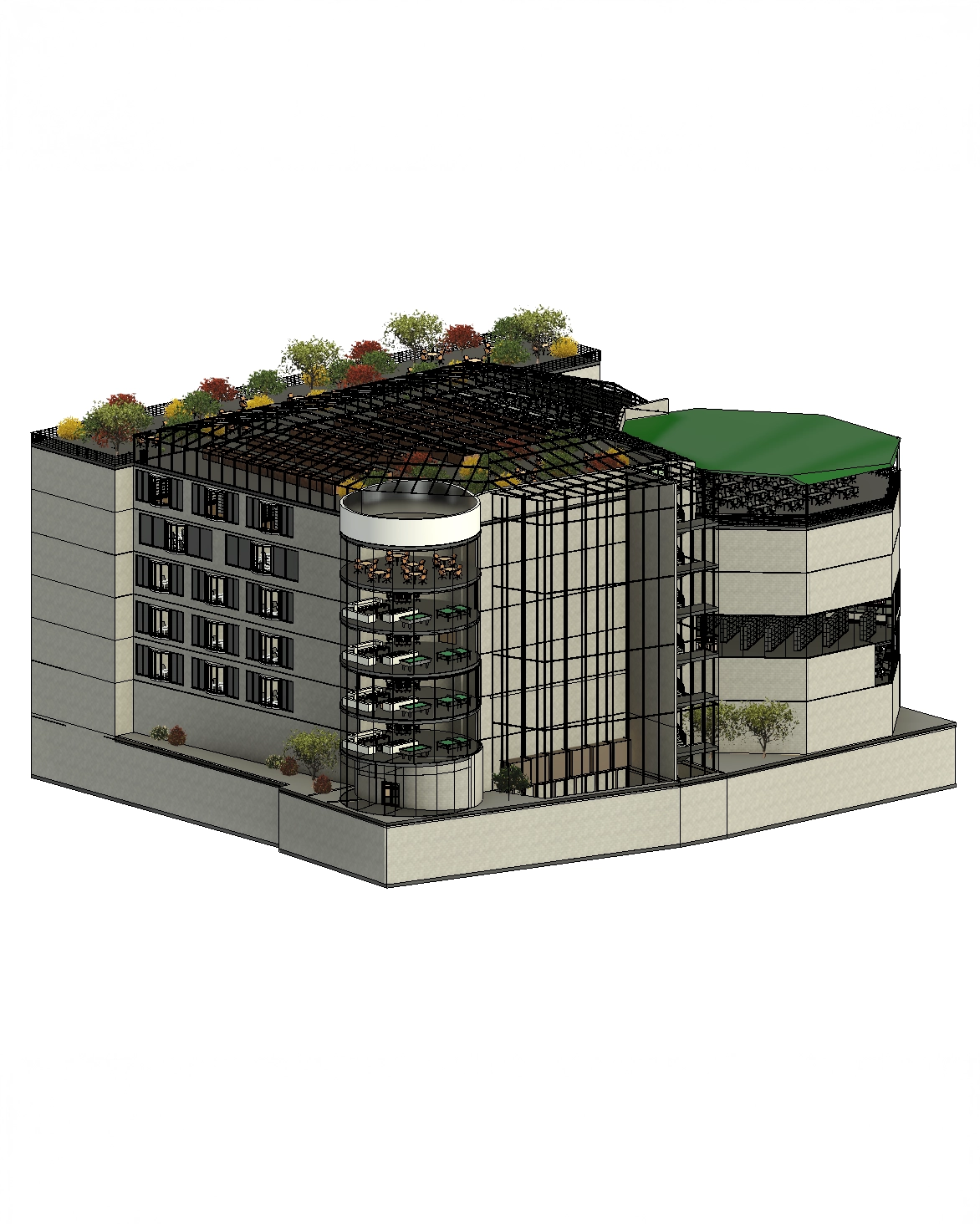
Project Gallery
Skills Developed & Professional Impact
📊 Project Management Excellence
Mastered comprehensive project management across technical, financial, and interpersonal dimensions. Successfully coordinated 4-person interdisciplinary team through 3-month capstone project, managing schedules, deliverables, risks, and team dynamics. Navigated significant challenges including non-contributing team member, logo approval struggles, and compressed timelines—demonstrating adaptability and resilience essential for engineering leadership roles.
🏗️ BIM & CAD Proficiency
Gained expert-level proficiency in Autodesk Revit for complete building modeling, from structural elements to MEP systems integration. Learned Fusion 360 for physical model preparation and fabrication planning. Developed understanding of architectural design principles, spatial planning, building codes, and sustainable design integration—skills directly transferable to civil, mechanical, and structural engineering applications.
🌿 Sustainable Design & LEED Expertise
Developed comprehensive knowledge of LEED Platinum certification requirements and sustainable building practices. Researched and integrated 5+ advanced energy systems including solar, water recycling, intelligent HVAC, and high-efficiency appliances. Gained appreciation for holistic sustainability considering location, materials, indoor environmental quality, and innovation—preparing for green engineering careers addressing climate change.
Technical Skills Portfolio
Project Reflection & Key Takeaways
"The Kinect Build Industries capstone project taught me that successful engineering extends far beyond technical proficiency—it requires leadership, adaptability, and unwavering commitment to team goals. Managing diverse personalities, navigating unexpected challenges, and maintaining project momentum despite setbacks prepared me for the complexities of real-world engineering practice. This experience solidified my passion for sustainable design and project leadership, confirming my trajectory toward civil/structural engineering with focus on green building innovation."
🎯 Leadership Under Pressure
Successfully led team through multiple crises (logo rejections, member absences, timeline compressions) by maintaining calm, reallocating resources effectively, and keeping focus on deliverable completion. Learned that great project managers adapt strategies while preserving team morale and project vision.
🤝 Team Dynamics Management
Navigating situations where team members don't fulfill commitments taught invaluable lessons about workload redistribution, maintaining professionalism, and focusing on controllable factors. Developed empathy for future colleagues facing similar challenges while recognizing importance of accountability.
💡 Iterative Design Process
The 8-iteration logo approval journey reinforced that engineering design is inherently iterative—requiring persistence, attention to feedback, and continuous refinement. Best solutions emerge through repeated cycles of creation, evaluation, and improvement rather than expecting perfection on first attempt.
📐 Holistic Systems Thinking
Integrating LEED sustainability, architectural aesthetics, structural systems, and user experience demands holistic perspective. Learned that exceptional engineering considers interdependencies between subsystems, optimizing whole rather than individual components—critical skill for complex infrastructure projects.